
If you have finished writing a book, or you are close to finishing one, you have probably typed some version of the same question into a search bar: how do I self-publish a book?
You are not alone. Self-publishing has become one of the most popular routes for new and established authors alike. It gives you control over your work, your timeline, your pricing, and your rights. The trade-off is that you become responsible for every decision a traditional publisher would normally handle for you.
This guide walks you through the entire process, from a finished manuscript to a book that is live, listed, and selling. At each stage, we point you to deeper guides so you can go further on the topics that matter most to you.
What Does Self-Publishing Actually Mean?

Self-publishing means you, the author, take your book to market without a traditional publishing house acquiring it first. You keep the rights to your work, you decide how it looks and when it releases, and you earn a much larger share of every sale.
Today, “self-publishing” does not mean “doing it all alone.” Most successful self-published authors build a small team: an editor, a cover designer, a formatter, and a marketing partner. You stay in charge, and you bring in specialists where it counts.
Self-Publishing vs. Traditional Publishing
Before you commit to a route, it helps to understand the difference.
| Self-Publishing | Traditional Publishing | |
|---|---|---|
| Who owns the rights | You | Usually the publisher, for a set term |
| Speed to market | Weeks to months | Often 1 to 2 years |
| Creative control | Full control over title, cover, content, price | Shared, and often the publisher has the final say |
| Upfront cost | You pay for services | Publisher pays (but you need an agent and an acceptance) |
| Royalties | Typically much higher per copy | Typically lower per copy |
| Marketing | Your responsibility, with optional professional help | Limited support for most debut authors |
Neither path is right for every author. If you want speed, control, and ownership, self-publishing is a strong fit. If you want to go deeper on this decision, our author opportunities page explains where assisted publishing fits between the two.
Step 1
Finish and Self-Edit Your Manuscript
Before you spend a dollar on services, make sure your manuscript is genuinely finished. That means:
- A complete draft. Every chapter written, every plot thread resolved or every argument made.
- At least one full revision pass. Read the book start to finish. Fix structural problems first (pacing, missing scenes, weak chapters), then worry about sentences.
- Fresh eyes. Set the manuscript aside for a week or two, then read it again. You will catch problems you could not see before.
- Beta readers. Ask three to five people in your target audience to read it and tell you where they got bored, confused, or excited.
Self-editing is not a substitute for a professional editor, but it makes professional editing faster, cheaper, and far more effective.
Step 2
Invest in Professional Editing
Editing is the single most important investment you will make in your book. Readers forgive many things, but they rarely forgive a book full of errors or a story that loses them halfway through.
There are several levels of editing, and each does a different job:
- Developmental editing looks at the big picture: structure, plot, character, pacing, and argument.
- Line editing improves the flow, clarity, and style of your sentences.
- Copyediting corrects grammar, punctuation, spelling, and consistency.
- Proofreading is the final polish that catches the last typos before publication.
Not every book needs every level, but every book needs at least a copyedit and a proofread.
Step 3
Design a Cover That Sells
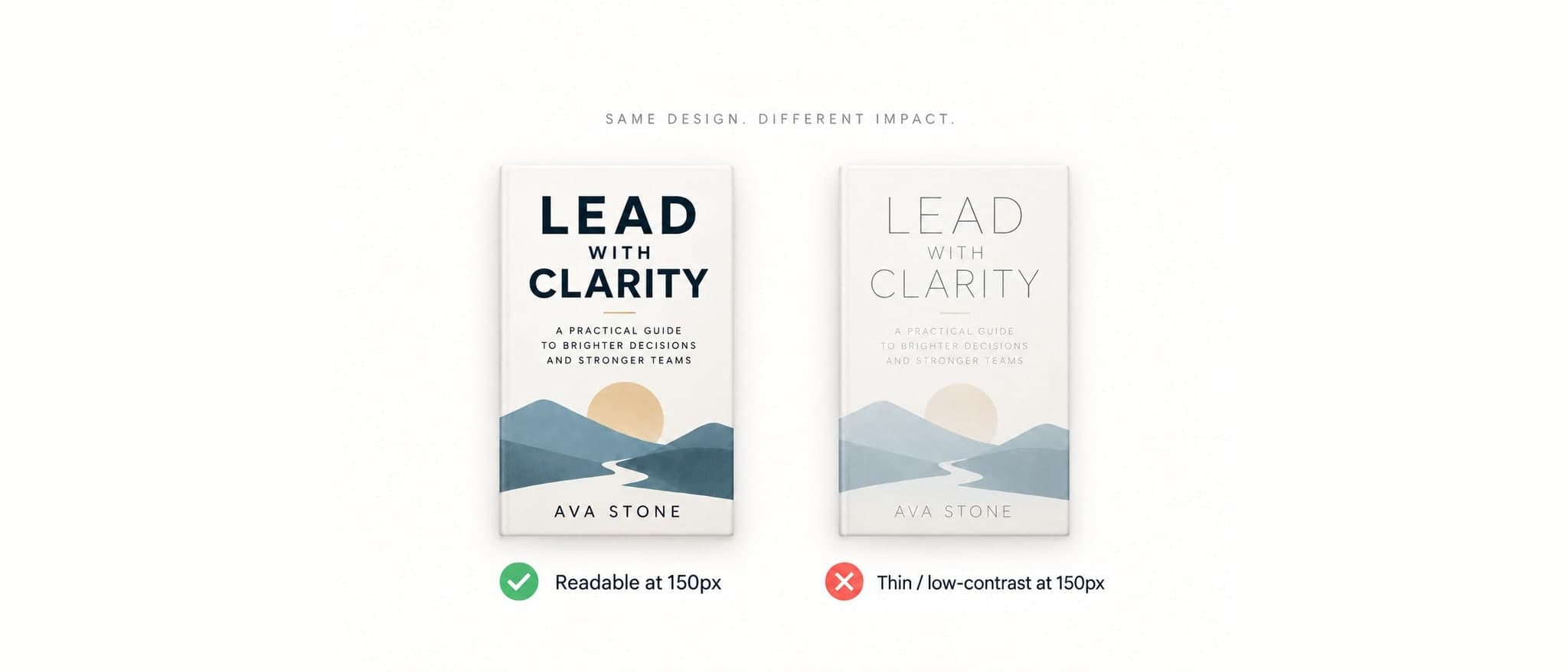
Readers do judge a book by its cover. Your cover is your first and most powerful piece of marketing, and it has to work at two sizes: as a full print cover and as a tiny thumbnail on a retailer's search page.
A strong cover does three things:
- Signals the genre instantly. A reader should know within a second whether this is a thriller, a romance, a memoir, or a children's picture book.
- Stays readable at thumbnail size. If the title cannot be read in a small image, it will not get clicked.
- Looks professional next to bestsellers in your category. Browse the top 20 books in your genre and study what they have in common.
For print, your cover also needs a spine and back cover sized to your exact page count and paper type. This is where many first-time authors run into trouble with DIY tools. See our tips in Book Cover Design Mistakes That Cost Authors Sales.
Step 4
Format Your Interior for Print and Ebook
Formatting is what turns a document into a real book. Good formatting is invisible; bad formatting is the first thing readers notice. A professional interior includes:
- Correct trim size and margins for print
- Consistent fonts, chapter openers, and headers
- Properly built front matter (title page, copyright page, dedication, table of contents)
- Clean back matter (about the author, also-by page, newsletter sign-up, review request)
- A separate, reflowable ebook file (EPUB) that displays well on every device
Print and ebook are two different formats with different requirements. Uploading a word processor file straight to a retailer often produces awkward page breaks, broken tables of contents, and odd spacing.
Step 5
Get Your ISBN and Register Your Copyright
What is an ISBN?
An ISBN (International Standard Book Number) is the unique identifier that bookstores, libraries, and distributors use to track your book. Each format of your book (paperback, hardcover, ebook, audiobook) needs its own ISBN.
You can usually take a free ISBN from a retailer, but a retailer-assigned ISBN may limit where and how you can distribute. Buying your own ISBN means you are listed as the publisher of record and keep flexibility across platforms. Our complete publishing guide covers the pros and cons in more detail.
Copyright
Your work is protected by copyright as soon as you create it, but registering your copyright with the appropriate national office gives you stronger legal standing if you ever need to enforce it. Check the rules in your country and consider registering before you publish.
Step 6
Choose Where to Publish and Distribute
You have two main choices: go direct to individual retailers, or use a distribution partner to reach many platforms at once.
- Going direct (for example, publishing on Amazon KDP) is simple and gives you strong visibility on the world's largest online bookstore. You will handle account setup, uploading, categories, and keywords yourself.
- Going wide means listing your book across many retailers, libraries, and platforms so readers can find it wherever they shop. This widens your reach but adds setup work and requires correct metadata everywhere.
Our global distribution service places your book on 50+ platforms so you do not have to manage each account yourself.
Do not forget audiobooks. Audiobooks are one of the fastest-growing segments of publishing, and they let you reach readers who prefer to listen. See our audiobook production services.
Step 7
Price Your Book and Write Your Book Description
Pricing
Your price affects both your sales and your royalties. Look at comparable books in your genre, consider your page count and format, and think about your goal: building an audience (lower price) or maximizing per-copy earnings (higher price). Many authors test different price points over time.
Your Book Description
Your book description (also called the blurb or sales copy) is what turns a browsing reader into a buyer. A strong description:
- Opens with a hook in the first sentence
- Tells the reader what they will gain or experience
- Matches the tone of the book
- Uses the keywords your readers actually search for
- Ends with a clear reason to buy now
Struggling with yours? Our guide on why your book isn't selling on Amazon shows how the description fits into the rest of your listing.
Categories and Keywords
Retailers use categories and keywords to decide who sees your book. Choose categories where your book can realistically rank, and use keyword phrases real readers type into search bars. This is one of the most overlooked ways to get discovered.
Step 8
Plan Your Launch and Marketing
Publishing a book does not automatically sell it. Even excellent books disappear without a plan to reach readers. A solid launch plan includes:
- A pre-launch audience. Start building an email list and social following before release day.
- An author website. A professional home base where readers can learn about you, join your list, and buy your book.
- Early reviews. Reviews build trust. Send advance copies to readers who are likely to enjoy your book and leave an honest review.
- Social media and content. Share behind-the-scenes content, excerpts, and the story behind the book consistently, not just on launch day.
- Advertising. Paid ads can accelerate sales once your cover, description, and reviews are in place.
- Ongoing promotion. The most successful authors keep marketing long after launch.
How Much Does It Cost to Self-Publish a Book?
This is one of the most searched questions in publishing, and the honest answer is: it depends on your book and your goals. Costs vary widely based on length, genre, and the level of professional help you choose.
Here are the main cost categories to budget for:
- Editing and proofreading: Usually the largest line item, and the one you should protect.
- Cover design: A professional cover is non-negotiable for most genres.
- Interior formatting: Print and ebook files.
- ISBNs and registration: A small but necessary cost.
- Illustrations: Essential for children's books and some nonfiction.
- Marketing and advertising: Often ongoing rather than one-time.
- Optional extras: Audiobook production, an author website, and ghostwriting if you need help writing.
Not sure where to start? Request a quote and we'll match a breakdown to your manuscript and goals.
Common Self-Publishing Mistakes to Avoid
- 1. Skipping professional editing. It is the fastest way to earn bad reviews.
- 2. Using a DIY cover that does not match the genre. Your cover is your storefront.
- 3. Publishing without a marketing plan. Launch day is a starting line, not a finish line.
- 4. Ignoring metadata. Poor categories, keywords, and descriptions make your book invisible.
- 5. Rushing the process. A few extra weeks of polish can change your book's entire trajectory.
- 6. Signing with a company you have not researched. Always ask about fees, rights, ownership, and what happens to your book if you leave. Reputable publishing partners are transparent about all of these, and your rights should remain yours.
Frequently Asked Questions
How long does it take to self-publish a book?
Once your manuscript is finished, most authors take anywhere from a few weeks to a few months to move through editing, cover design, formatting, and setup. The timeline depends mostly on how much editing your book needs and how quickly you approve each stage.
Do I need an ISBN to self-publish?
You need one for most distribution routes, and each format needs its own. Some retailers provide a free one, but owning your ISBN gives you more control.
Can I self-publish a book for free?
You can technically upload a book without paying a publisher, but producing a book that competes with professional titles requires investment in editing, design, and formatting.
Do I keep the rights to my book if I self-publish?
Yes, when you self-publish independently you keep your rights. If you work with a publishing services company, always confirm in writing that you retain ownership of your work.
Can I self-publish a children's book?
Absolutely. Children's books have extra requirements, including illustration, page layout, and specific trim sizes, but they are a very popular self-publishing category.
How do I sell more copies after launch?
Consistent marketing, reviews, a strong author website, and visibility on the right platforms all matter. Start with our marketing services.